There is always going to be some food waste when eating in the dining halls, but as UConn students, you can help to limit these numbers.
Each student averages 2.2 oz of food waste per dining hall entry
Think about the food you are leaving behind on your plate. Where is it going? It is scraped off the plate and trucked off to Quantum Organics (http://www.quantumbiopower.com/) where it is broken down into methane to power local businesses. Willimantic Waste takes all the garbage and recycling that cannot be broken down at Quantum. All the leftover/untouched food from the cafes and dining halls is donated to the Covenant Soup Kitchen.
Hunger cues are hard to follow. Here is an easy guide to learning your physical hunger levels and hunger that is in your head.
- 1— Starving, weak, dizzy
- 2— Very hungry, cranky, low energy, lots of stomach growling
- 3— Pretty hungry, stomach is growling a little
- 4— Starting to feel a little hungry
- 5— Satisfied, neither hungry nor full
- 6— A little full, pleasantly full
- 7— A little uncomfortable
- 8— Feeling stuffed
- 9— Very uncomfortable, stomach hurts
- 10— So full you feel sick
Aim to eat a meal around 3-4 don’t wait until 1-2, that leads to overeating and not making mindful food choices. Stop at 5-6.
Learning when to stop eating is important. Listen to your body… relax before you start eating, eat slowly, and stop a quarter of the way through your meal, and let your mind catch up to tell your brain if you are full.
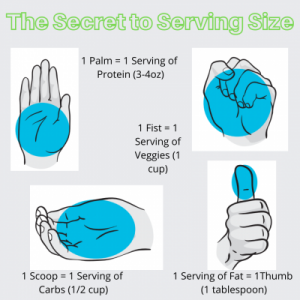
When in the dining hall, it is easy to grab anything in sight. Before you do that, stop and think about how hungry you are, what you have already eaten, and then think back to your serving sizes to make a full, nutritious meal.
Source: https://www.healthlinkbc.ca/health-topics/zx3292